
 Image 1 of 6
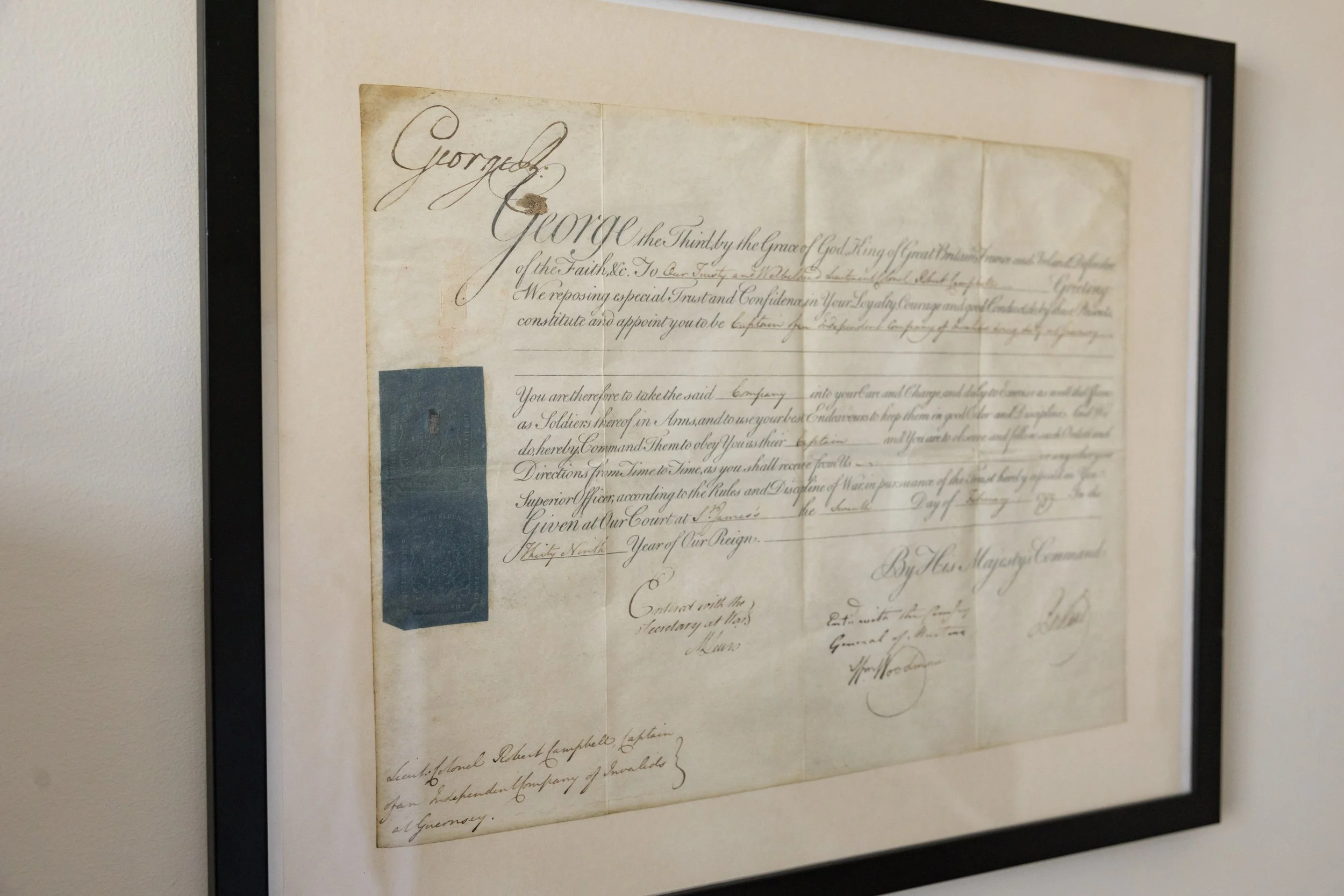 Image 2 of 6
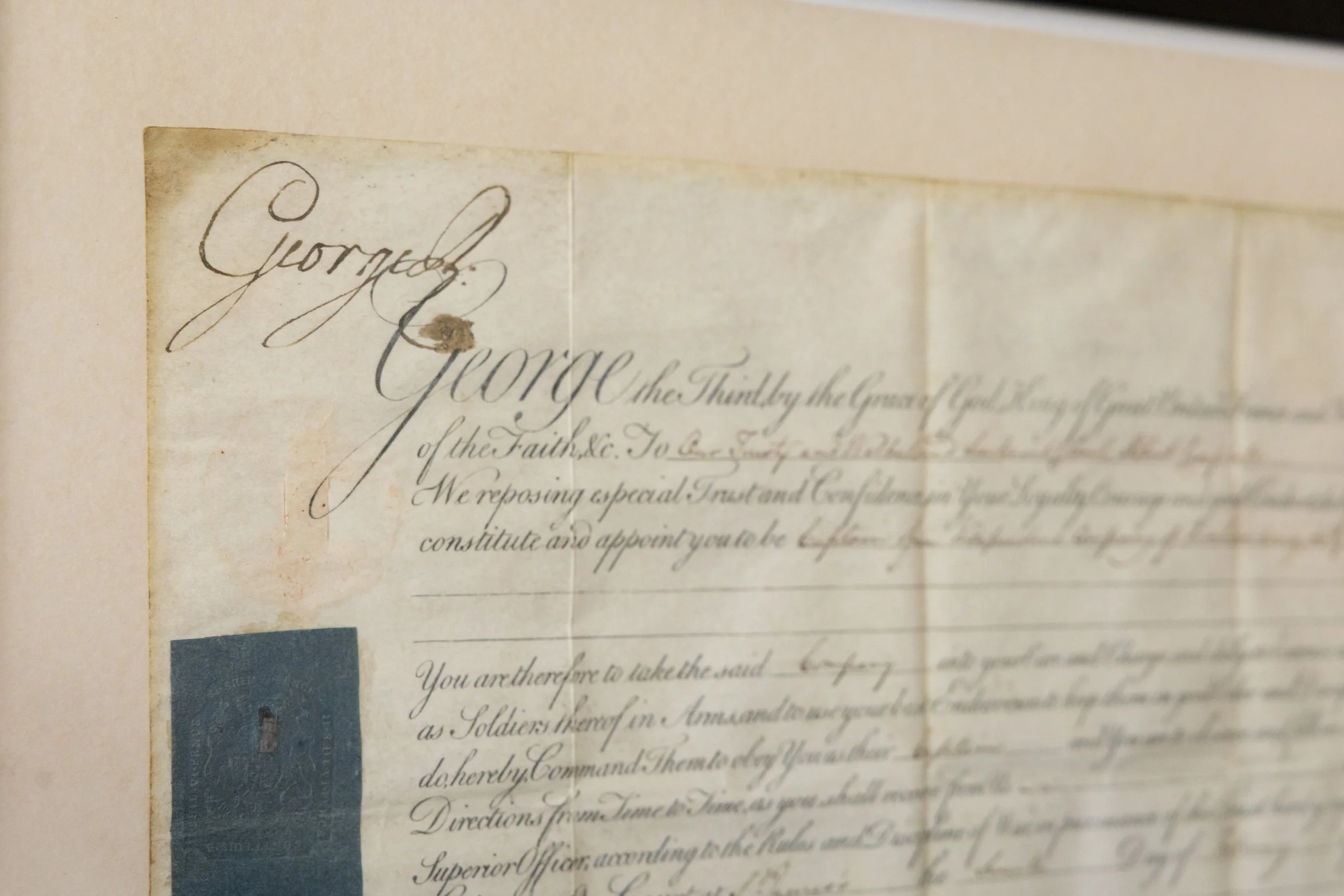 Image 3 of 6
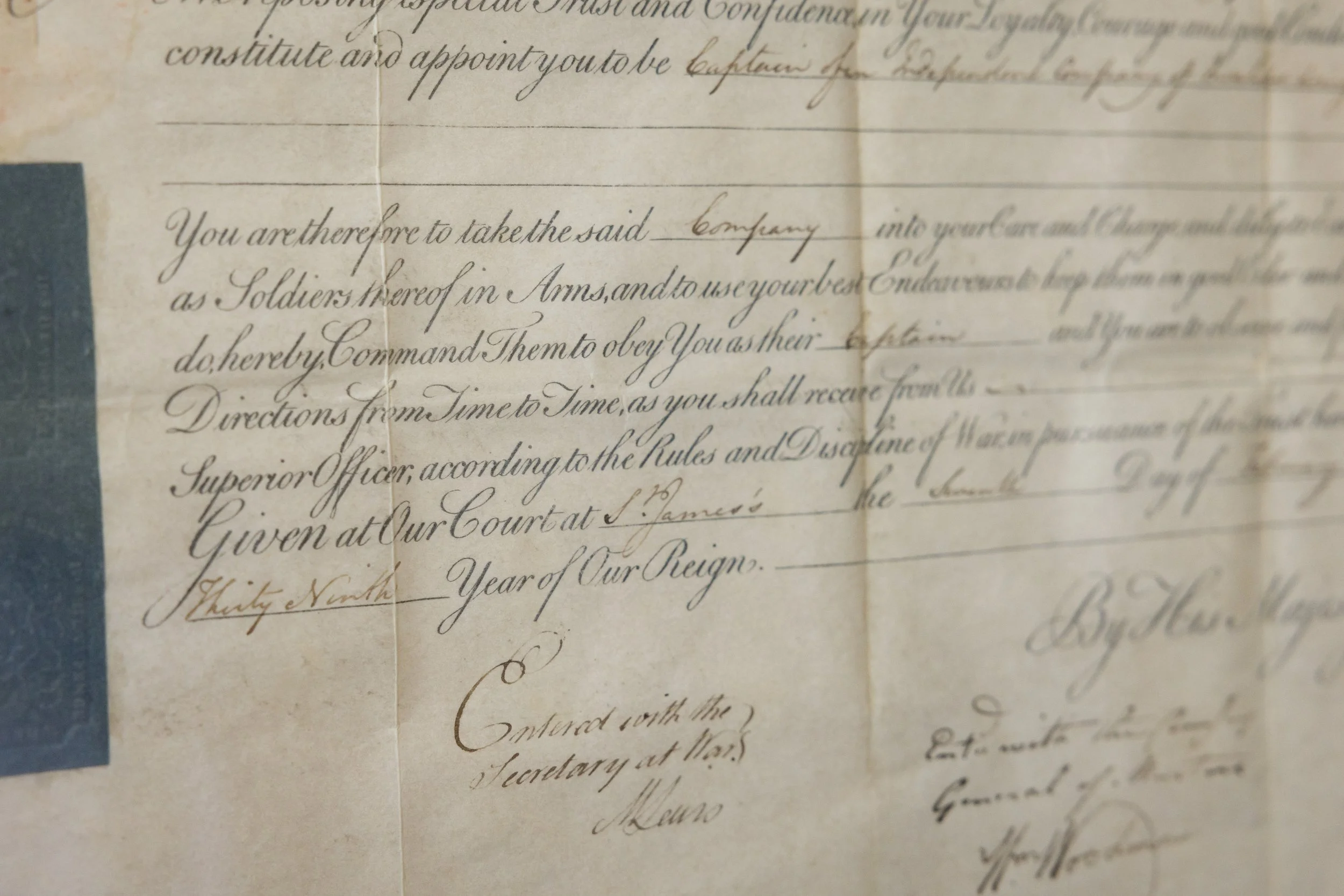 Image 4 of 6
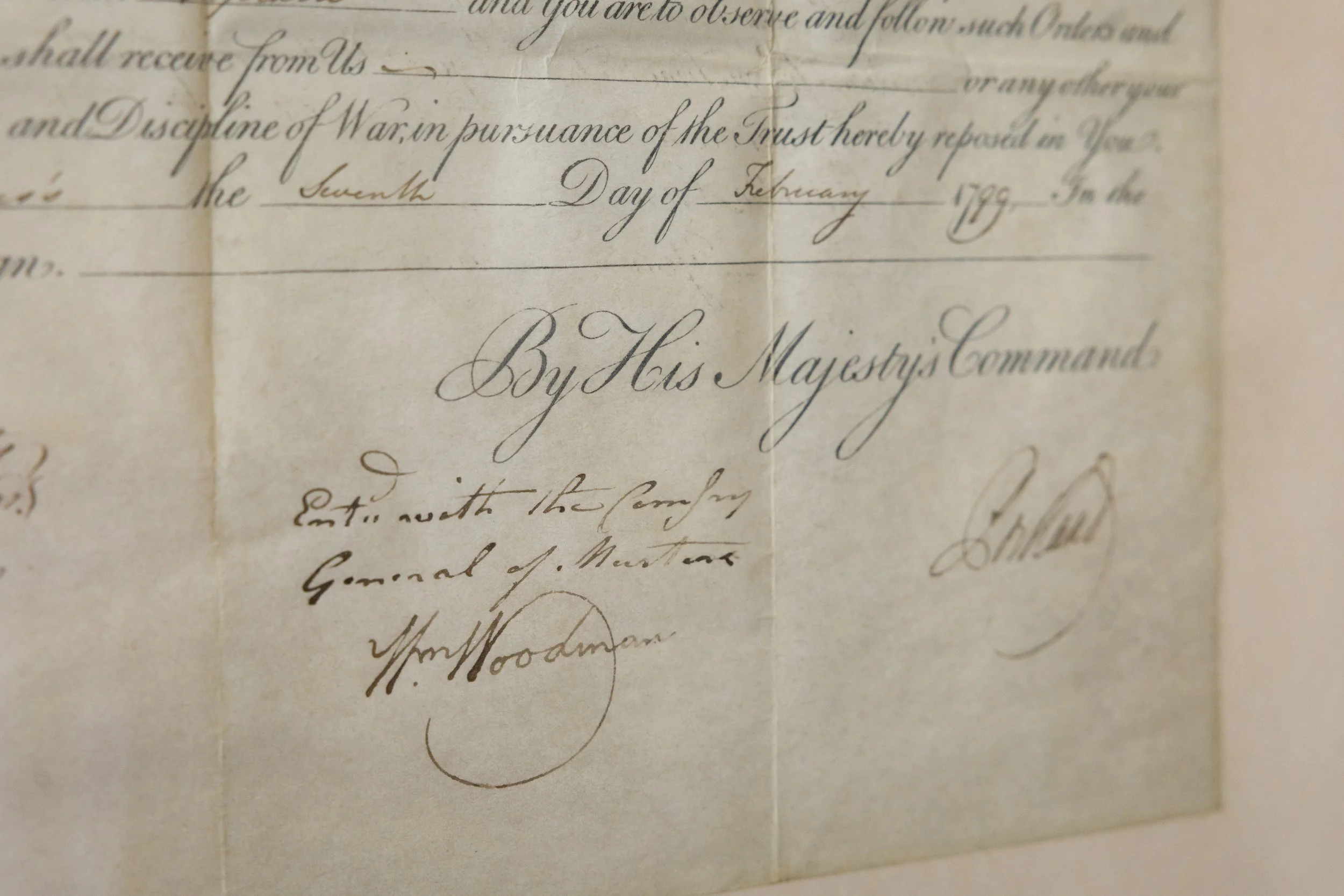 Image 5 of 6
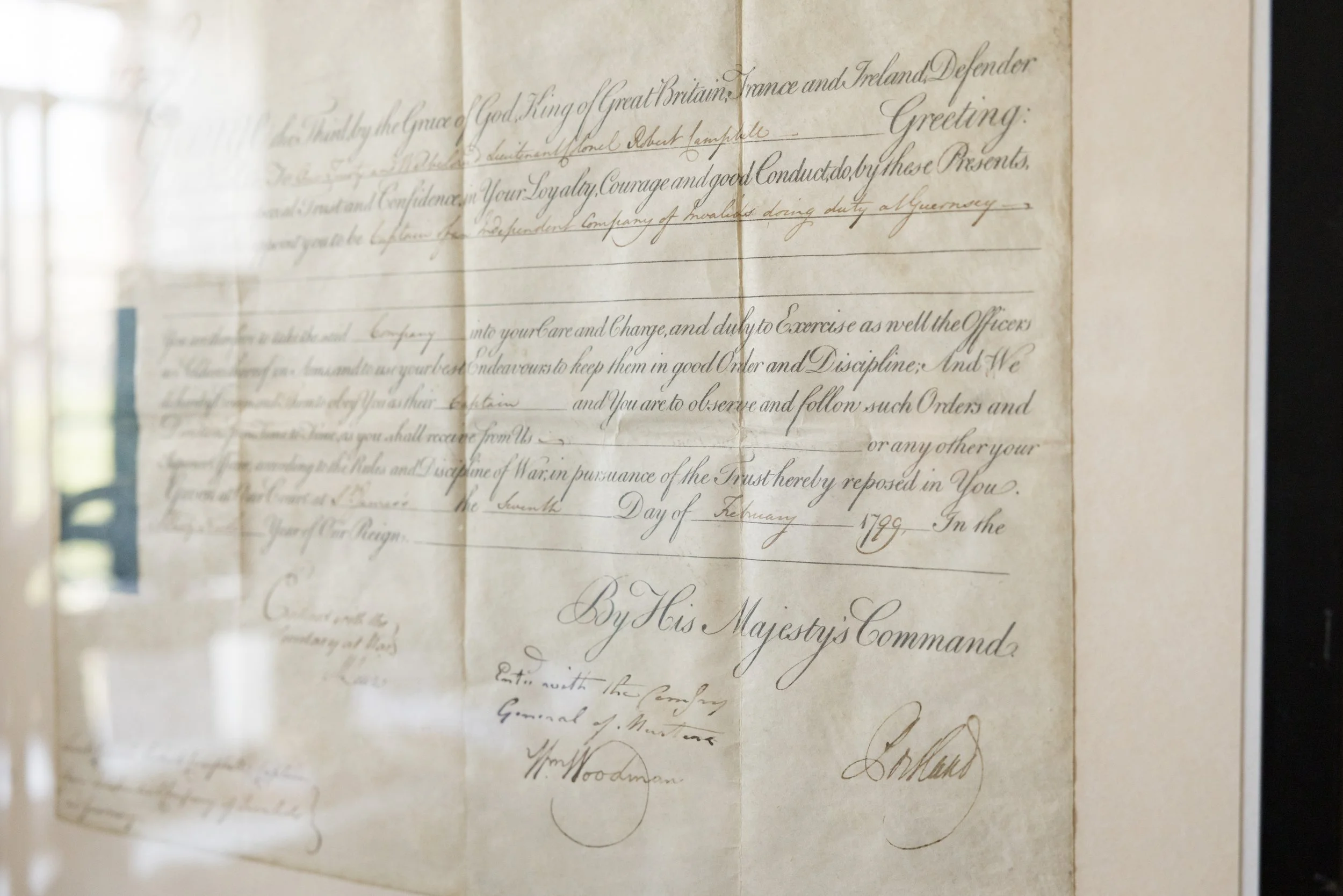 Image 6 of 6
-
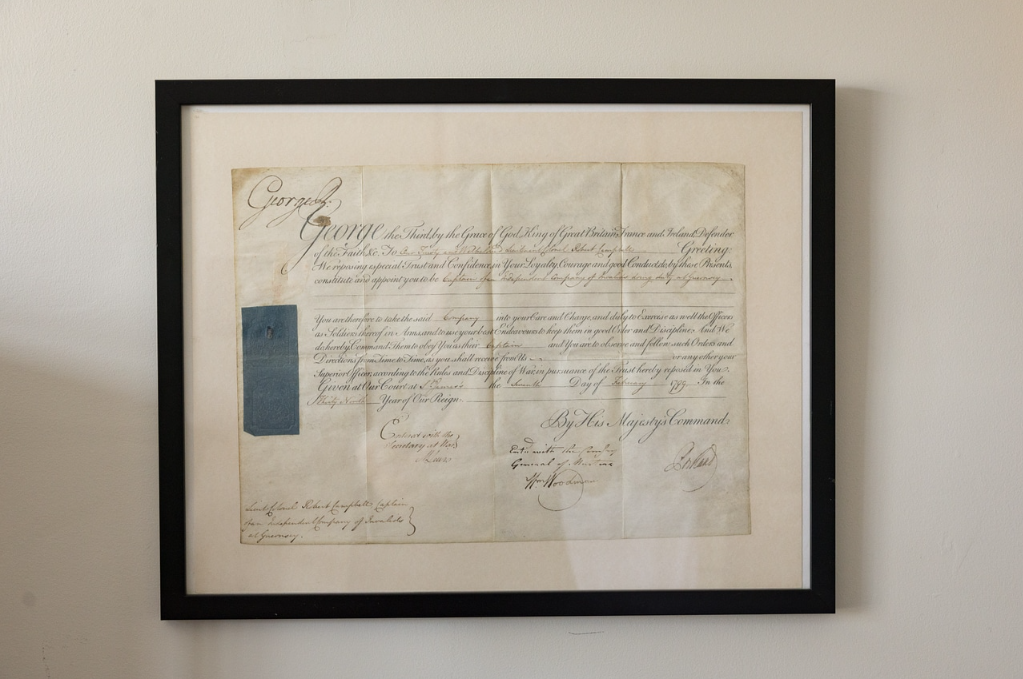
The commission bears the royal sign manual of George III: the formal authorization through which the appointment took legal force as an act of the Crown. On official instruments of this period, the sign manual was applied through the machinery of royal government and should not be described as a modern-style personal autograph.
The countersignature “Portland” is William Cavendish-Bentinck, 3rd Duke of Portland. He had served as prime minister in 1783, when the definitive Treaty of Paris was signed—formally ending the American Revolutionary War and recognizing American independence. By 1799, he was Home Secretary. “Lewis” represents the Secretary-at-War office, while “Wm Woodman” is associated with the Commissary General of Musters, responsible for military musters and official recording. The blue panel at left forms part of the document’s revenue-stamp authentication.
-
The named officer is confirmed in the London Gazette as commanding an Independent Company of Invalids at Guernsey. British Army records also trace a Lieutenant-Colonel Robert Campbell through service in the Royal Americans, or 60th Regiment of Foot: ensign in 1756, lieutenant in 1758, and captain in 1762. The career arc strongly suggests, though does not independently prove, that this is the same officer.
In period usage, “Invalids” referred to veteran soldiers assigned to strategic garrison, fortification, and home-defence duty. Guernsey’s position near the French coast made it an exposed post in 1799, when Britain was alert to the possibility of invasion across the Channel.